top of page


CONNIE MACK
BASEBALL'S GRAND OLD MAN
You can sing praises all day long for Sirianni, Pederson, Manuel, Shero, and the rest of 'em (and rightly so) - but the fact remains that no man ever brought Philadelphia more world titles than one Cornelius McGillicuddy, better known as Connie Mack.
Born during the American Civil War and standing 6' 2" tall, Connie Mack was literally the towering figure of baseball in Philadelphia for half a century - a stoic symbol of class, consistency, and quiet leadership.
As both part-owner and manager of the Philadelphia Athletics, Mack crafted one of the most unique legacies in sports history - managing a single team for an unprecedented 50 straight seasons. Not surprisingly, Mack is by far both the winningest and losingest manager in MLB history, and the only one to win back-to-back World Series titles in different eras.
In contrast to today's dumpy middle-aged managers in their clownish baseball uniforms, Mack wore a tie, jacket, and signature straw hat (or bowler) in the dugout. He was the embodiment of the game’s early grace and dignity, leading the A’s through glory, struggle, and transformation.
Under Mack’s leadership, the Athletics captured 9 AL pennants and 5 World Series titles (1910, 1911, 1913, 1929, 1930) with some of the most talented teams ever assembled.
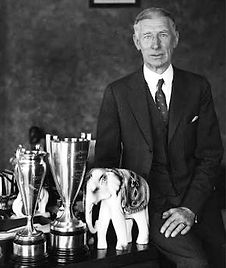
Giants manager John McGraw, believing that Mack overpaid for baseball talent, mocked the Athletics as a “white elephant.” Mack embraced the insult with a smile and adopted the white elephant as the team’s official mascot. It became a proud symbol of resilience and defiance, perfectly fitting for a city that thrives on proving doubters wrong.
Connie Mack was not a fiery manager. He led with intelligence and calm, often giving instructions from the dugout without ever raising his voice. He believed baseball was a thinking man’s game.
But as the decades rolled on and the sport changed, Mack stayed rooted in his old-school ways. In his final years, the Athletics began to slip into mediocrity, and stories emerged of the aging legend occasionally dozing off during games. Still, Mack's presence in the dugout remained deeply respected. He was not just managing a team, he was stewarding a legacy.
For decades, the Athletics had been Philly's team of choice. Their home, Shibe Park (which would later be renamed Connie Mack Stadium), was considered a crown jewel among baseball stadiums. The Phillies were a mere afterthought until the 1950s, when the "Whiz Kids" began to capture the city's attention with new energy and young stars. Many fans moved on from the Athletics.
In 1954, just a few years after Mack’s retirement, the team was sold and relocated to Kansas City. Yet in the hearts of old-school Philadelphians, Connie Mack remained a revered figure - a gentleman who built a baseball empire with patience and pride, one game at a time.
The Athletics have since moved from Kansas City to Oakland to Sacremento and (soon) Las Vegas, but their team mascot remains an elephant - now a shaggy live mascot named Stomper.
Today, you will still hear Connie Mack's name mentioned over cheesesteaks in South Philly, especially among baseball traditionalists who recall an era when Philly had two teams and a dignified man in a straw hat ran the show. If you stroll along the west side of Citizens Bank Park, you will see a majestic bronze statue of baseball's grand old patriarch.
Connie Mack did not just manage baseball games - he helped shape the sport itself. And while the Athletics may have moved on, Philadelphia never forgot the quiet brilliance of the man who gave the city decades of greatness, and a white elephant to believe in.





bottom of page